Curatorial Statement by Ekaterina Juskowski:
The vessel is among humanity’s oldest models for understanding how the invisible inhabits form. Before the vessel was defined by what it held, it gave form to identity. Intuitive, ritualistic, and not yet bound by utility, the vessel carried imagination. Its interior established a fundamental distinction between self and world, while its material form made the invisible dimensions of human experience tangible. The vessel thus emerged not simply as a container of matter, but as a structure through which identity could be formed and transmitted.
Situated within Bellevalia Olive Grove on Hydra Island, the site-specific exhibition explores how the human self is communicated through ritual, material experience, and relations with the natural world. The works are encountered within the living environment from which their material originates, while nature provides the conditions through which the objects are perceived. Here, human intuition and natural processes coexist conceptually within the vessels, while their placement among the trees extends this relationship into physical space. The grove therefore becomes an active participant in the exhibition's argument. Like fired clay, the olive trees register duration and preservation, acting as material witnesses through which life endures beyond its immediate moment. Their weathered surfaces act as material witnesses through which biological and cultural memory extends beyond the immediate moment.
Vessels considers this enduring form as a pre-utilitarian expression of consciousness and a bearer of identity. The works of the four ceramicists assembled here draw upon animistic traditions in which objects are understood as inhabited presences, at once artifacts and apparitions. The artists do not reject the utility or function of the objects so much as propose another order of value that extends beyond them. Through their practices, the artists release ceramics from practical necessity and create vessels as philosophical forms in which inner and outer worlds, human histories and natural forces intersect. Within this site-specific encounter, the boundary between interiority and the external world becomes permeable, bringing human intuition and natural forces into relation.
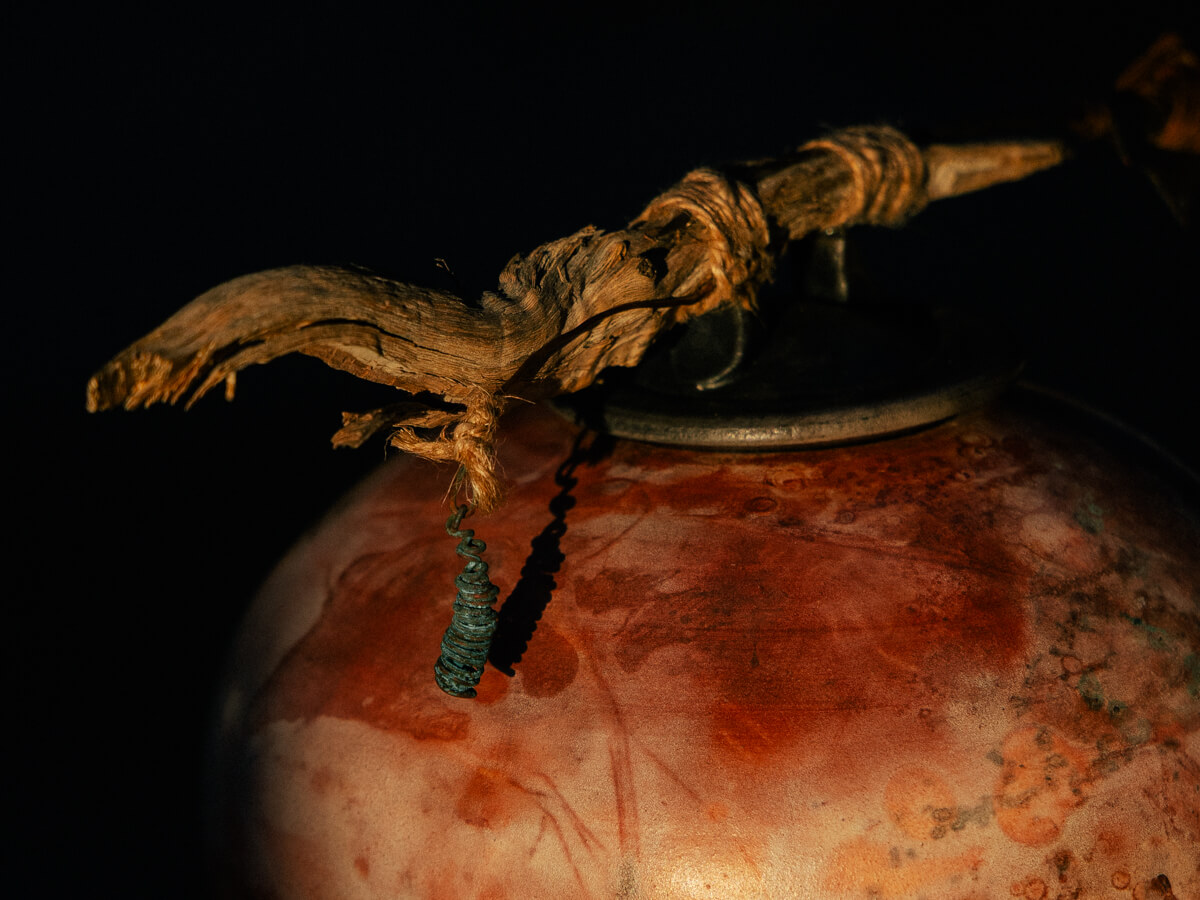
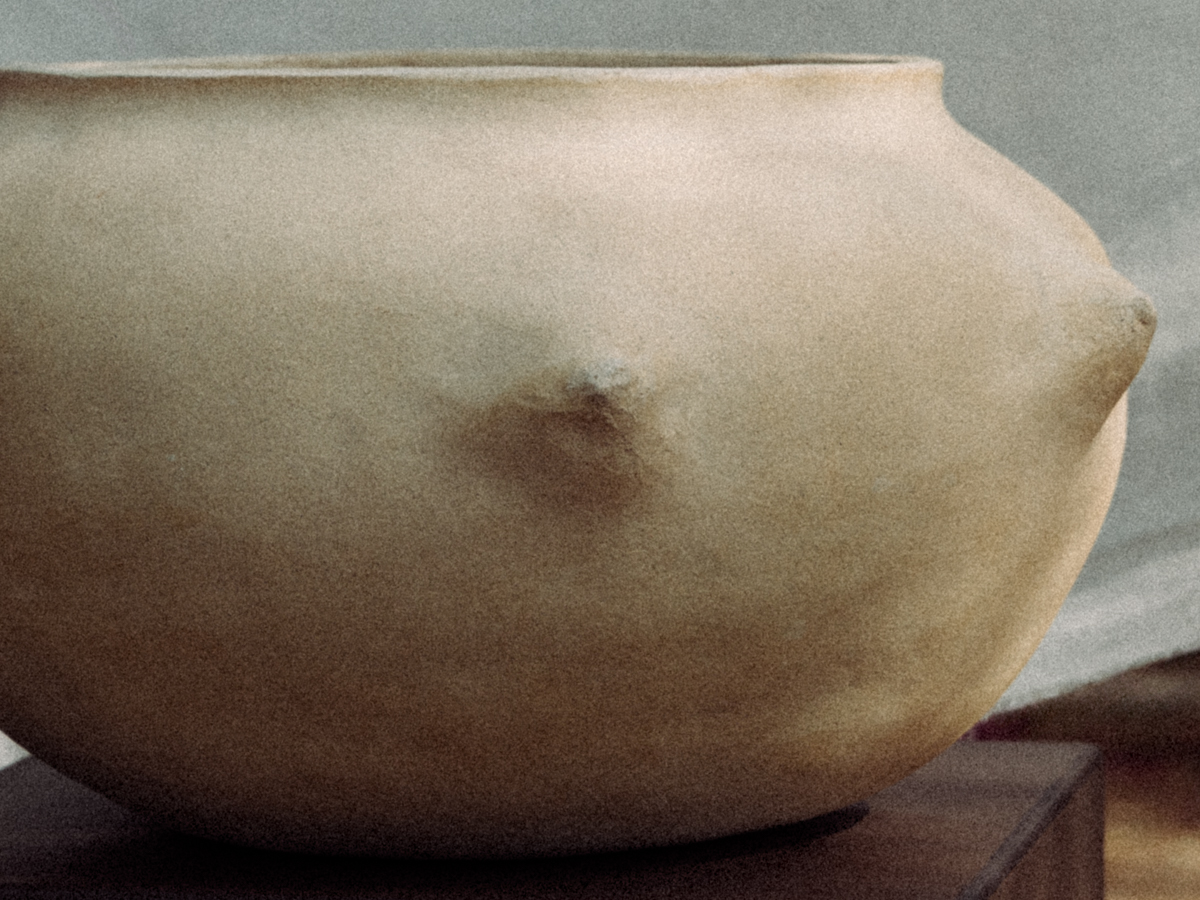
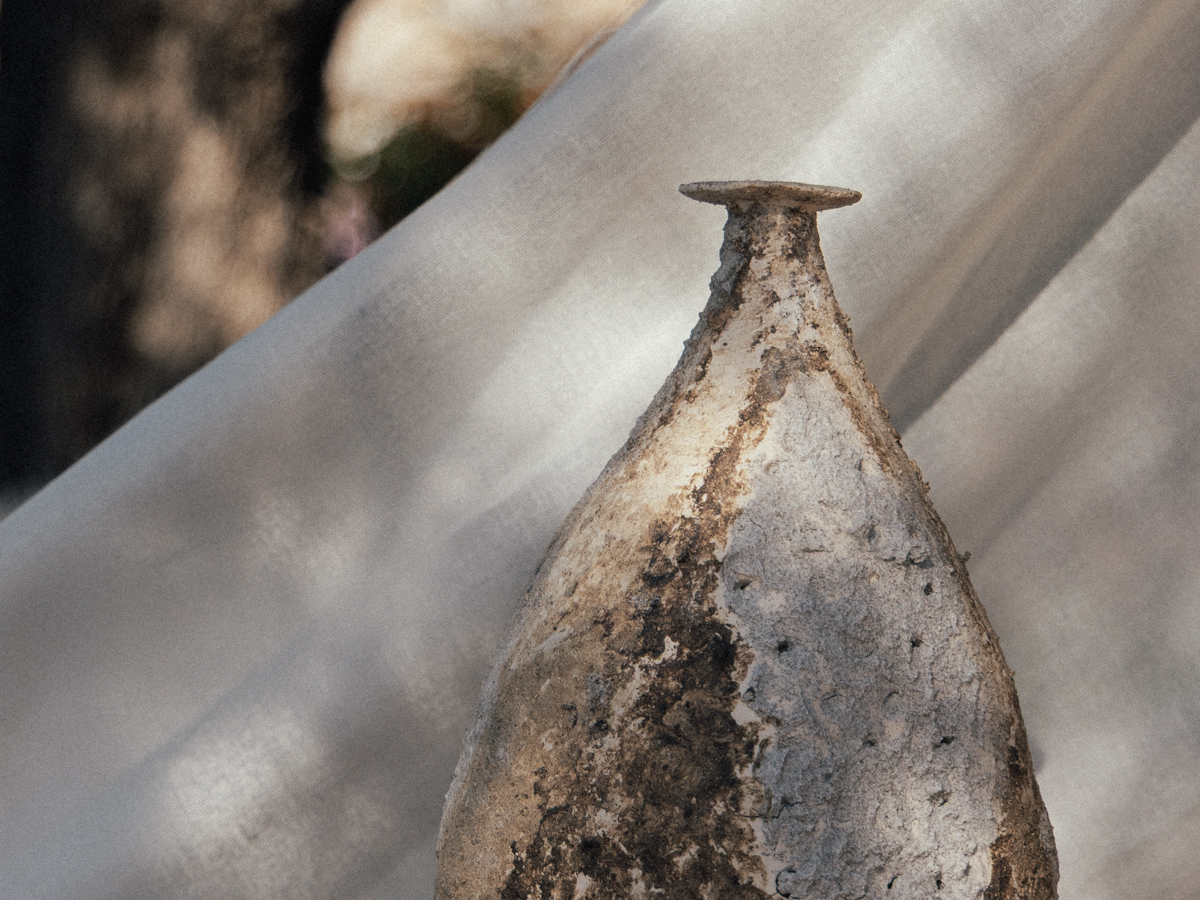
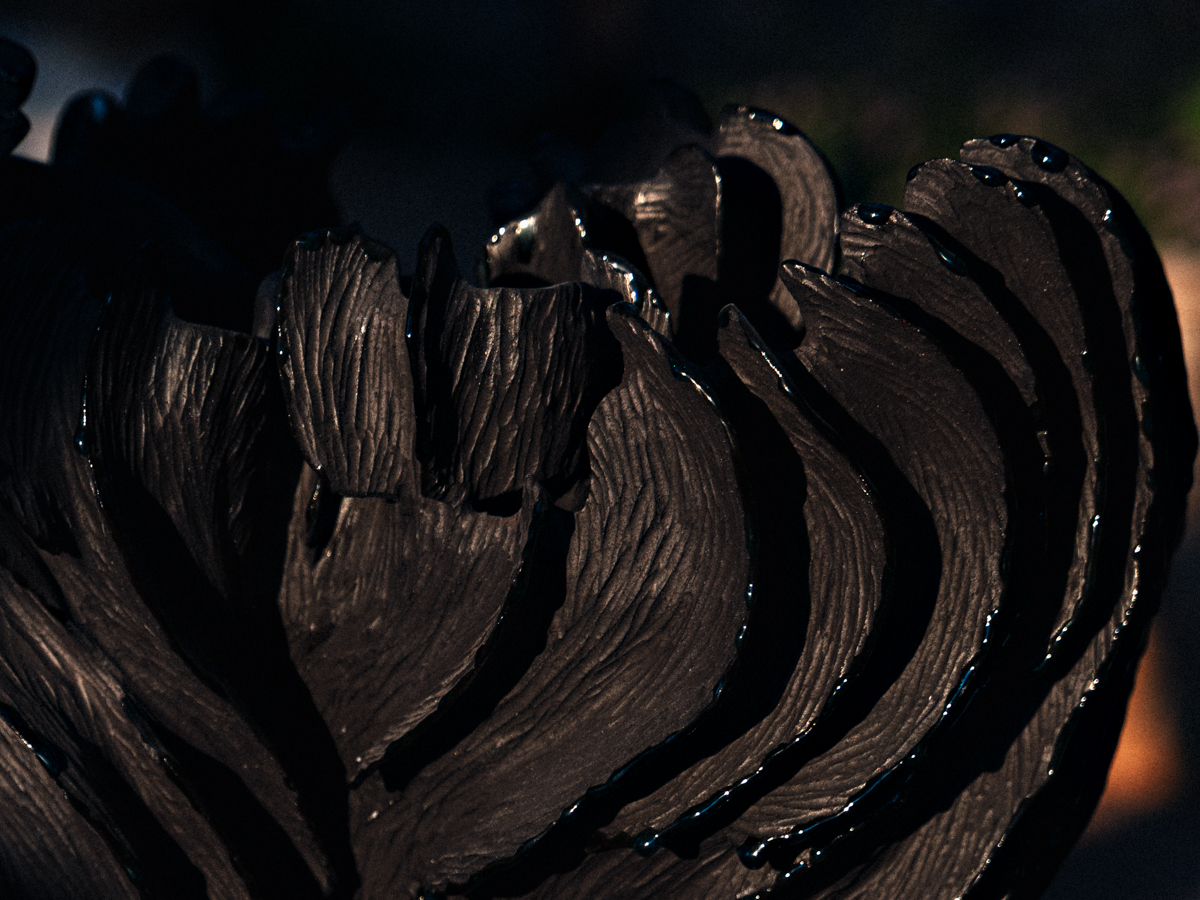
Biblical traditions describe human beings as “earthen vessels,” fragile material forms capable of containing divine presence. Diane Alexandre’s work reinterprets this metaphor. The artist uses clay to shape vulnerable bodies animated by forces that exceed their material boundaries. Rather than invoking the divine directly, Alexandre recasts the sacred through nature and emotion.
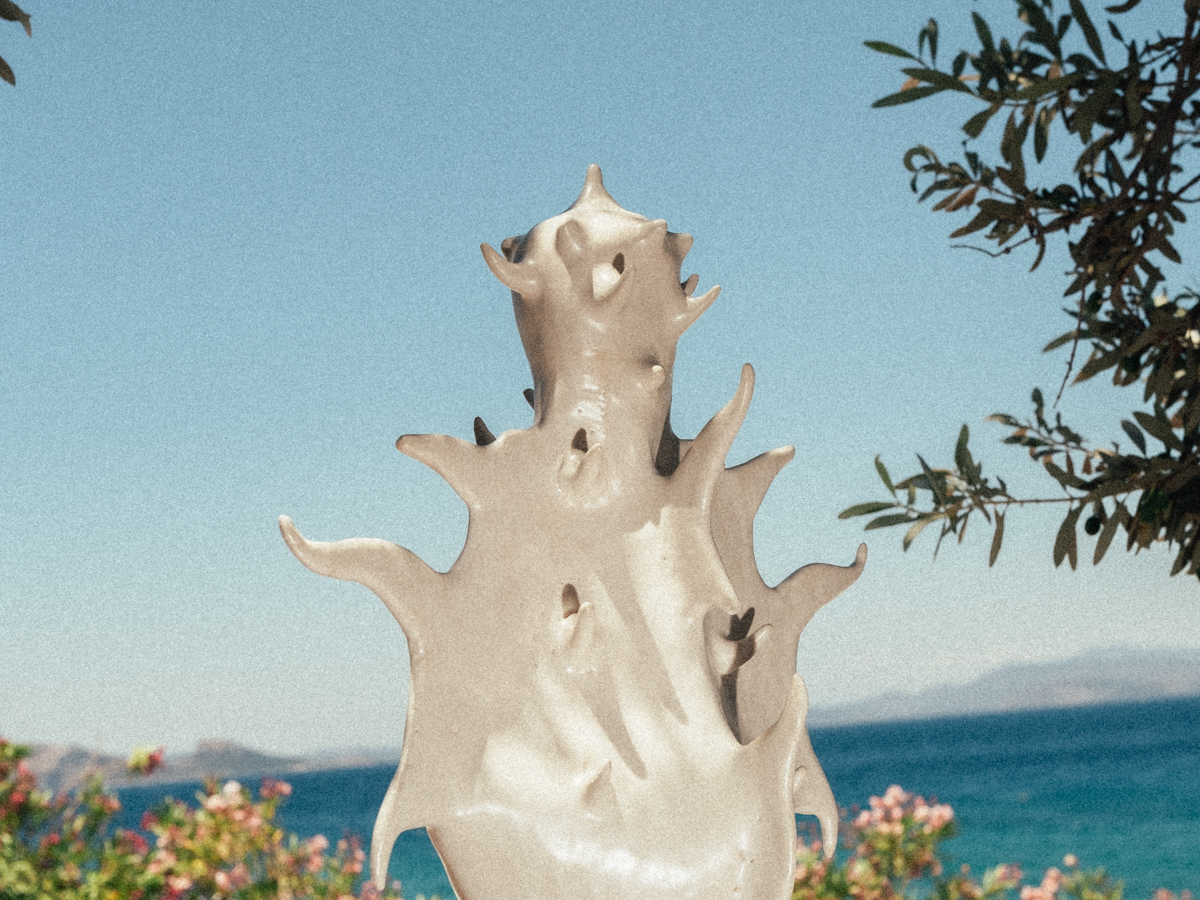
Emergence I (2024) is both a column of rising smoke and the unfolding form of a blooming black orchid. Inspired by the wildfires around Athens, the sculpture absorbs the dread of ecological destruction and confronts it through aesthetic transformation, allowing beauty to emerge from the image of catastrophe. In White Goddess (2022), fragility becomes inseparable from defense. The work appears delicate and ephemeral, but its spiked surface denies proximity, transforming the vessel into both an exposed body and a protective structure. Throughout Alexandre’s practice, the ceramic form functions as a psychic threshold that neither erases nor conceals anxiety, but sublimates it into beauty.
Produced by Mnemosyne Projects and Bellevalia Hydra
Exhibition design: Marilia Lezou
Location: Bellevalia Olive Grove, Hydra Island, Greece
Date: June, 2026